完全合成モーターオイル
  ディーゼルエンジンオイル
  ギアオイル
ギアオイル  モーターサイクルオイル
 The change from “Kunlun Lubricant Oil” to “Kunlun Lubricant” involves only one character, but behind it is the starting point of the domestic lubricant industry’s gradual shift from channel competition to brand competition. Today the rise of local lubricant enterprises is both a fact and the beginning of stepping onto the world stage; the journey of internationalization of domestic lubricant enterprises has already begun, and this is an inevitable trend of the “Belt and Road” initiative promoting Chinese industry going global. Kunlun Lubricant clearly already has such ambition, and the brand strategic transformation and the provision of one-stop solutions mean a beginning and also mean that market competition is entering a new dimension.
Kunlun Lubricant launches the most significant brand strategic transformation since its founding
“Without lubricants, the world would not be able to run.” This is not an alarmist statement. Lubricants have always been called the “lifeline of industry” and the “blood flowing through manufacturing.”
However, although it is important, the Chinese market — already firmly the world’s second largest — is also the market with the most numerous brands. At present there are about 2,500 domestic lubricant manufacturers, generally small in scale and mainly pursuing low-price strategies with overcapacity in mid- and low-end products, a point already recognized by the industry.
“Chaotic” is the most intuitive impression outsiders have of China’s lubricant market. Unlike automakers, which are protected by national industrial policy, China’s lubricant market is basically fully open and fully competitive, which is also why the Chinese lubricant market is crowded with multinational oil giants such as Shell, BP and Mobil at the same time as it has a large number of local brands.
From the perspective of the global lubricant market, the world’s 15 largest lubricant producers, including Mobil, account for 1% of all lubricant manufacturers but control more than 60% of global lubricant sales.
In the Chinese market, the world’s top 15 lubricant producers — including ExxonMobil, Shell, BP, PetroChina and Sinopec — also control more than 60% of China’s lubricant output. Statistics from China Lubricant Information Network show that among the top 21 brands by engine oil e-commerce transaction volume on Alibaba platforms in 2017, their combined engine oil transaction volume accounted for 70.65% of the whole network’s volume.
At present China’s lubricant market has formed two “multinational legions” represented by Shell and Mobil, two “state-owned enterprise legions” represented by PetroChina and Sinopec, and a “private enterprise legion” composed of numerous small and medium-sized lubricant companies, seemingly forming a situation of three powers in balance.
But in China’s lubricant industry, dominant enterprises in major downstream sectors such as construction machinery, automobiles, power equipment and steel smelting are increasingly demanding about lubricant suppliers’ product development strength, product quality and delivery times, requiring lubricant enterprises to provide a complete set of lubrication technical services while selling them high-quality, fairly priced lubricant products.
At the same time, China’s economy has entered a new normal, macroeconomic growth has slowed, core industries highly related to the lubricant industry have shrunk significantly, industrial integration has eliminated backward capacity, and the spread of high-grade products has extended oil change intervals — the scale of demand in China’s lubricant market tends to decline.
The trend of market concentration is intensifying, constantly squeezing the living space of the vast majority of small and medium-sized companies. This means a group of lubricant companies with a thin market base, limited investment and low-end positioning will be eliminated, and the survival of a single specialized lubricant company is becoming increasingly difficult.
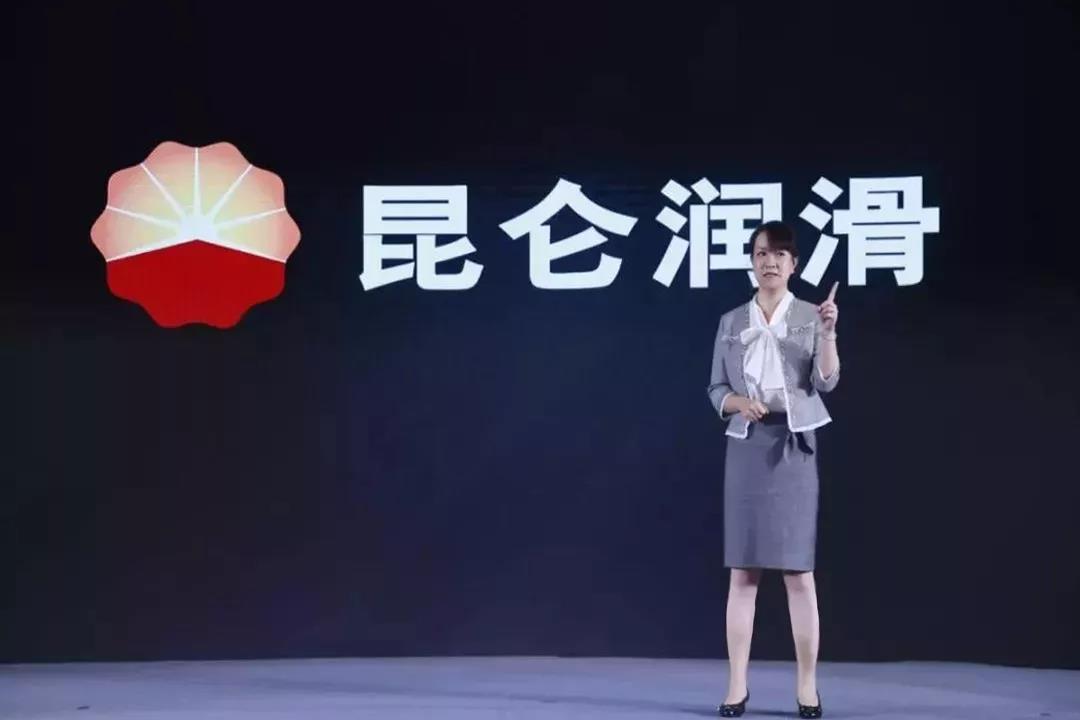
*Ms. Mi Liping, director of the Kunlun Lubricant Product Design Center, introduces the ultra-long mileage solution to those present
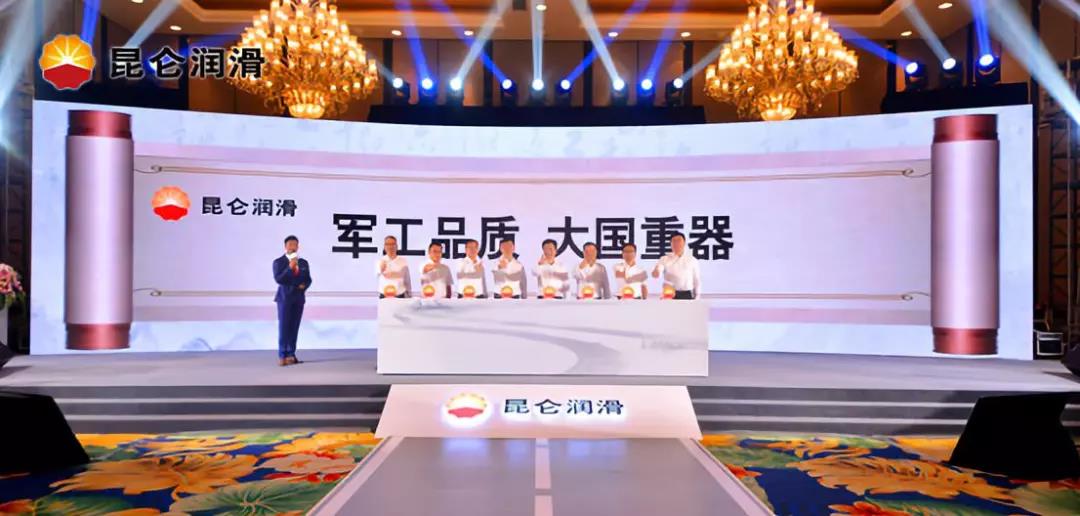
It is precisely against this background that Kunlun Lubricant, China’s largest local brand, held a launch conference on August 23 at the New Century Global Center in Chengdu, Sichuan, at which it launched a solution and at the same time removed one character from its name, changing “Kunlun Lubricant Oil” to “Kunlun Lubricant.” This one-character change is described as the most significant brand strategic transformation since Kunlun Lubricant was founded.
At the launch conference, Mr. Fu Bin, general manager of PetroChina Sales Company, announced that Kunlun Lubricant would move from product manufacturer to “product + service” comprehensive solution provider, achieving the transformation from production-oriented to service-oriented and from business-oriented to platform-oriented.
Automakers transforming from car manufacturers to mobility service providers is already a global trend, and that trend has now found an echo in the lubricant market.
Kunlun Lubricant taking the lead in transforming from a production-oriented enterprise to a service-oriented one is not merely a change in management thinking; it also requires sorting out and reshaping the company’s systems and product management.
It means providing high-quality service and products at every link of the industry chain: from R&D and design to raw material promotion, from processing and production to logistics and distribution and the marketing system — all bear on the company’s success or failure.
This foreshadows a further forming of the pattern of coordinated development of the lubricant industry chain: upstream extending to base oils, additives and other industries, downstream extending to marketing channels and the after-sales service market related to lubricant products.
Such systematic competition is obviously beyond the reach of the many enterprises that are small in scale, scattered in form and weak in brand. And brands with such scale and technological accumulation are being pushed by the market into the role of industry integrator.
PetroChina was China’s earliest lubricant producer and the inventor of China’s first drop of lubricant and first additive, but it was not until 2000 that it integrated more than a dozen lubricant production units belonging to different refining and chemical enterprises into PetroChina Lubricant Company, and at the end of 2001 launched the “Kunlun” brand we know today.
In this sense, Kunlun is the earliest practitioner of concentration in China’s lubricant industry.
“Kunlun Lubricant Oil” entered the market with its first product in April 2002, and subsequently launched the “Tian”-series products such as Kunlun Tianyuan, Kunlun Tianrun and Kunlun Tianjiao, formally completing the full-line integration of brand and products.
Over these dozen-plus years, China has grown into the world’s second-largest lubricant producer and consumer, with annual demand for lubricants growing at nearly 10%; Kunlun Lubricant Oil also achieved the transformation from raw material trading and mainly bulk oil to R&D leadership and brand operation, and amid long-term domination of the high-end lubricant market by foreign brands it has become a force not to be ignored in the lubricant market.
In 2007, Kunlun Lubricant Oil reached an oil supply cooperation with the internationally famous shipping company Maersk Line, signing a three-year oil supply contract with a total supply of 40,000–50,000 tons — the first time a Chinese local brand wrestled with an international giant in the international market.
Today, with 60 years of development history and having always insisted on independent core technology R&D and application of lubricants and their additives, PetroChina Lubricant Company owns two major R&D centers in Lanzhou and Dalian, has a 40-year cooperative history with Dongfeng Motor in vehicle gear oils and diesel engine oils, and has led the development and upgrading of China’s heavy-duty vehicle lubricants. Its “Preparation technology and industrial application of extreme-pressure anti-wear additives and packages for gear oils” even rewrote the history of gear oil additives being long monopolized by foreign brands.
In 2017, the international market share of PetroChina Kunlun Lubricant Oil rose to 17%; Kunlun Lubricant Oil achieved operating revenue of more than 10 billion yuan, up 20% from 2016, with profit growth of 219%.
“Rational lubrication” forces industrial upgrading
As the world’s second-largest lubricant producer and consumer, China consumes more than 15% of the world’s lubricants and nearly 40% of its greases. Growth in lubricant production and sales represents rapid growth in market demand on the one hand; on the other, the waste and irrational lubrication that exist in the lubricant industry cannot be ignored.
Today Kunlun Lubricant’s technical capability and industrial scale push it to take on the role of integrator of China’s lubricant market, and also push it to become an advocate and promoter of new concepts.
Taking the automotive industry as an example, lubricant may account for less than one thousandth of a car’s construction and use costs, yet its impact on car life is far greater than 10%, and “rational lubrication” can reduce maintenance costs by 25%.
So-called “rational lubrication” on the one hand emphasizes professional oil use, reducing various losses caused by improper lubrication and improving economic efficiency, and on the other aims to prevent waste and environmental pollution caused by blind oil use.
This concept was first proposed by Kunlun Lubricant Oil in China, and today it has become a concept promoted by the government.
Today the two major areas of “rational lubrication” — the transport logistics sector and the high-end precision manufacturing industry — are forcing industrial upgrading through their demand for high-quality lubricants.
The road logistics transport market exceeds 5 trillion yuan in scale with more than 20 million logistics vehicles, ranking first in the world. But logistics costs account for 16% of GDP, far higher than the 10% of developed countries. Calculated against China’s 2017 GDP of 82.7 trillion yuan, that extra 6% of cost means we lost nearly 5 trillion yuan — an astonishing figure.
This 6% loss is largely due to vehicle wear and consumption; for heavy-duty diesel vehicles, long life for diesel engine oil and gear oil is key to reducing costs.
On August 23, when announcing its brand strategic transformation, Kunlun Lubricant simultaneously launched an ultra-long mileage solution serving the market; the solution includes long-life lubricating products and numerous lubrication services, covering full-cycle lubrication needs and solving users’ lubrication problems in a comprehensive, integrated way.
This is the first highly targeted “product + service” solution launched by Kunlun Lubricant since it announced its transformation into a service provider, and also the first solution launched by a domestic lubricant enterprise.
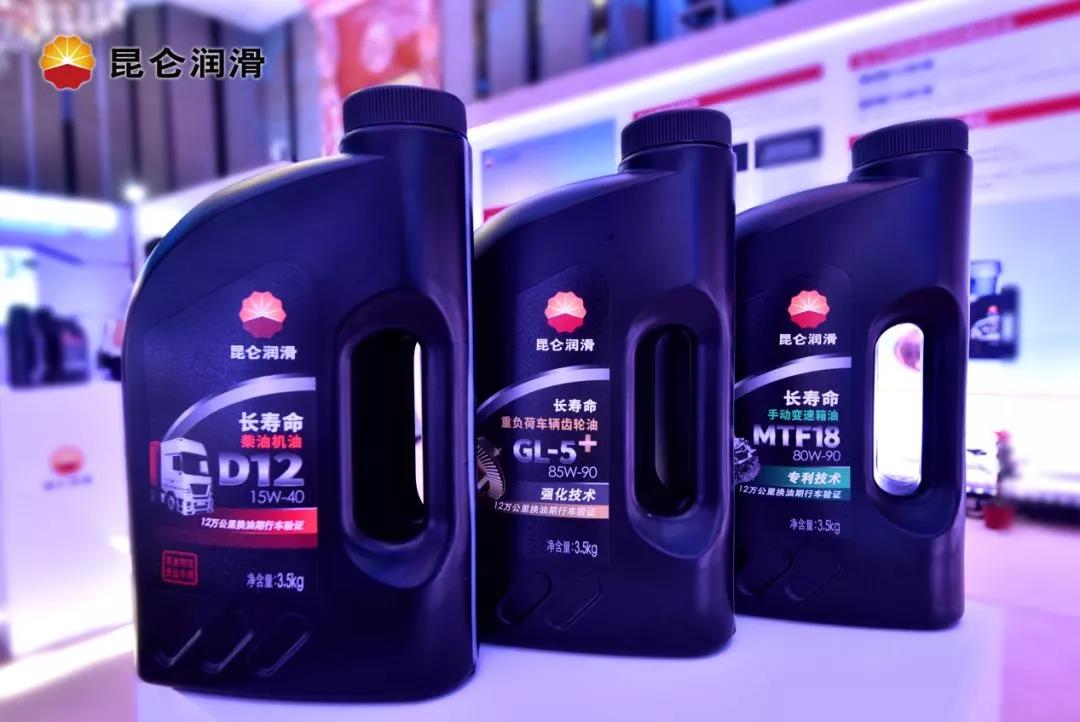
*The three long-life products of the ultra-long mileage solution
The Kunlun Lubricant ultra-long mileage solution mainly includes three long-life products: D12 long-life diesel engine oil, MTF18 long-life manual transmission oil and GL-5+ long-life heavy-duty vehicle gear oil. These three products apply to a wide range of regions and can effectively control oil viscosity growth and piston deposit formation, saving maintenance costs and improving vehicle operating efficiency.
While providing the corresponding products, Kunlun Lubricant also provides expert technical support, supporting fleet fuel cards, oil monitoring, same-mileage oil changes and many other lubrication services — this is the comprehensive “product + service” solution.
According to calculations, compared with the traditional model, the ultra-long mileage solution can save more than 5,000 yuan per vehicle per year in maintenance costs, and the increased transport time from raising the oil change interval to 120,000 kilometers, together with the avoidance of stoppages and even safety accidents caused by improper lubrication, will improve vehicle operating efficiency even more considerably.
This is clearly of far-reaching significance for changing the current situation of high logistics and transport costs in China.
In manufacturing, as China embarks on the path of new industrialization, the equipment enterprises purchase also tends toward larger scale and greater refinement. More advanced production equipment means more, more stable and higher-quality output, but once a failure occurs it will cause enterprises greater losses and more dangerous harm.
Kenneth E. Bannister proposed in his book “Industrial Lubrication”: “60% of industrial equipment failures stem from insufficient or improper lubrication.”
In 2006–2007 the Chinese Academy of Engineering organized dozens of domestic academicians and experts to conduct a survey on “Research on the Current Status and Development Strategy of Tribology Science and Engineering Applications” covering eight industries: metallurgy, chemicals, railway, automobiles, ships, agricultural machinery and national defense. In 2006, losses of energy, materials, equipment and production caused by poor lubrication and material wear in those eight industries reached 950 billion yuan; with correct application of lubrication technology, 327 billion yuan of losses could be avoided, equal to 1.55% of that year’s GDP.
China’s GDP in 2006 was 21.94 trillion yuan, and by 2017 it had grown to 82.71 trillion yuan.
The lubricant industry is facing higher performance requirements, and this situation is especially prominent in high-end manufacturing.
The essence of an industrial robot is a precision instrument, and completing refined operations means the robot itself needs lubricating products of solid quality.
As a representative of high-end manufacturing, its competition is also systemic: from core components such as reducers and controllers to the selection cost of consumables such as mainframe manufacturing and lubrication, all are key to testing comprehensive competitiveness. Some media estimate that the purchase cost of an ordinary 6-axis industrial robot is about 150,000–300,000 yuan, but the later debugging and maintenance costs are at least about 200,000 yuan, of which a single 170-kilogram drum of imported special lubricant for robot reducers retails for 20,000–25,000 yuan.
But to ensure equipment operates normally and for fear of “losing much for a little,” many enterprises dare not readily switch to domestic lubricants that are much lower in price, bearing huge usage costs, so the cost-effectiveness the robots bring is greatly reduced and may even increase the enterprise’s burden.
However, this phenomenon has recently been reversed by Chinese local brands.
Kunlun Lubricant and SIASUN Robot, a leading Chinese industrial robot company, through several years of close cooperation, developed industrial robot grease products and obtained technical access.
On May 10 this year, the two sides jointly established the “Robot Lubrication Engineering Joint Laboratory,” which will carry out deep cooperation in the fields of robotics and intelligent manufacturing lubrication applications, raise the machinery and equipment lubrication level for Made in China 2025, and promote the development of China’s robot lubrication and application industry.
According to forecasts by the International Federation of Robotics (IFR), by 2020 520,000 new industrial robots will be put into use in factories around the world, more than 40% of them in the Chinese market, with a compound annual growth rate of 21% — three times that of North America — making China already the world’s largest industrial robot consumer.
In this field, close-quarters competition between Chinese and foreign lubricant brands can both effectively further help enterprises reduce operating costs and prevent China’s industrial upgrading from being constrained by others.
And in China-made high-end equipment and large-scale projects such as aircraft carriers, high-speed rail and ultra-high-voltage direct current transmission projects, behind the seemingly loose “domestic brand” requirement for lubricating products lies a quality guarantee that is “neither confined to others’ hands nor allowed to fail.” For many years Kunlun Lubricant, which has undertaken this task, has launched corresponding lubricating products according to the different needs of each project, serving the pillars of the great nation and becoming a pillar of the great nation itself.
The domestic lubricant industry is gradually transforming from channel competition to brand competition and service competition
Today the demand for lubricants not only involves every aspect of industrial production but also affects the daily lives of hundreds of millions of ordinary people.
The shift from product provider to service solution provider is driven by market change and is even more Kunlun’s own initiative. Today China’s lubricant market shows two major characteristics: in terms of product supply, suppliers are increasingly concentrated among large manufacturers, changing the former scattered competition into concentrated competition; in terms of market consumption, consumer groups increasingly show dependence on production and maintenance organizations, with the characteristic of entrusted consumption becoming ever more obvious — very different from the “independent” consumption of the past.
In such an area, it is decided that local brands such as Kunlun have no way out if they remain trapped in providing products along a single dimension. Driven by both the market and their own development, the change from “Kunlun Lubricant Oil” to “Kunlun Lubricant” involves only one character, but behind it is the current situation of the domestic lubricant industry gradually transforming from channel competition to brand competition and service competition. And under the general trend of the national “Belt and Road” initiative promoting Chinese industry going global, the journey of internationalization of domestic lubricant enterprises has also begun.
And Kunlun Lubricant clearly already has such ambition.