Полностью синтетическое моторное масло
  Масло для дизельных двигателей
  трансмиссионное масло
  Мотоциклетное масло
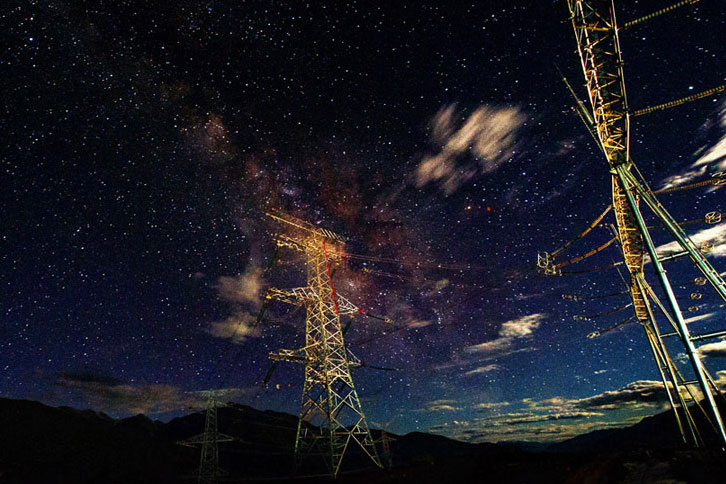
 The Sichuan-Tibet interconnection project, led by State Grid and hailed as the world's most challenging electric power 'sky road', has been successfully put into operation, marking the complete end of the history of isolated grid operation in Qamdo, Tibet and southern Garze and laying a solid foundation for the local economy and society to move onto a 'highway' of development.
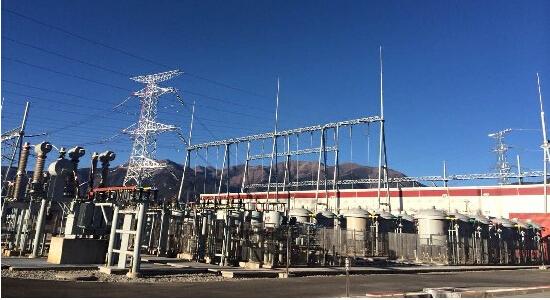
The Sichuan-Tibet interconnection project is another major power transmission and transformation project crossing severe cold and high-altitude regions after the Qinghai-Tibet interconnection project. As the 'heart' of a substation, the transformer is crucial, and whether transformer oil suited to the severe cold environment can be supplied in time is a key link in whether the project can be put into operation.
The safe and smooth entry into operation of the Sichuan-Tibet interconnection project also marks the climb of PetroChina Lubricant Company's transformer oil onto the power 'sky road' along the 'Three Rivers' fault zone.
Since the Sichuan-Tibet interconnection project went into operation, economic and social development in Qamdo and the electricity used by the people have been effectively guaranteed. Qamdo's electricity load has repeatedly hit new highs since last year, with the single-day maximum load reaching 90,000 kilowatts, a year-on-year increase of 42.63 percent, and the single-day maximum incoming power reaching 59,400 kilowatts. By the beginning of 2016 the Sichuan-Tibet interconnection project had cumulatively fed 83.82 million kilowatt-hours into the Qamdo grid and cumulatively delivered 29.93 million kilowatt-hours to the Sichuan grid.
Called to Action at a Critical Moment, Helping the Isolated Grid 'Connect' Sooner
The grid in the Qamdo area of Tibet had always operated in isolation, which not only restricted the local economy's access to electricity but also left it suffering the risk of power cuts. The Sichuan-Tibet interconnection project is a major construction project of the state's Twelfth Five-Year Plan to support Tibet's development; it aims to connect the Qamdo grid in Tibet with the Sichuan grid, fundamentally solving the long-standing power shortage in the Qamdo area of Tibet and southern Garze in Sichuan, and it is of great significance for promoting economic development and social stability in Tibetan areas.
On June 16, 2014, China XD Group submitted to the Northwest Sales Branch of the Lubricant Company a request for on-site delivery of 273 tons of KI45X transformer oil for three transformers and six reactors in Qamdo, Tibet, and also communicated information about the rugged roads, complex and changeable road conditions and harsh climate in the Qamdo area of Tibet.
China XD Group's Sichuan-Tibet interconnection project includes 500 kV reactors, 220 kV combined transformers, 220 kV capacitive voltage transformers, 110 kV capacitive voltage transformers, two amorphous alloy transformers, 15 bays of 110 kV combined electrical apparatus and five bays of 220 kV combined electrical apparatus and other power equipment, requiring nearly 300 tons of transformer oil.
China XD Group has had a good cooperative relationship with the Lubricant Company for many years and is also an important strategic partner. After receiving the delivery order, the Northwest Lubricant Sales Branch organized a meeting to study the organization of the Qamdo delivery work and drew up measures to complete the on-site delivery task by every possible means, so as to consolidate the strategic foundation and achieve the goal of win-win cooperation.
Kunlun transformer oil from the Lubricant Company, with its unique resource properties and good electrical performance, is widely used in the domestic power transmission and transformation field; more than 80 percent of the high-voltage transformers in many national key projects in the power industry nationwide, including the Daya Bay Nuclear Power Station, use Kunlun naphthenic-based transformer oil.
Since the Lubricant Company started its delivery business in 2011 it has successively completed delivery tasks for such key projects as State Grid's Hami South-Zhengzhou plus or minus 800 kV ultra-high-voltage direct current, Xiluodu left bank-Jinhua, Zhejiang plus or minus 800 kV ultra-high-voltage direct current, the Zhefu 1,000 kV ultra-high-voltage alternating current line and China Southern Power Grid's Liangdu direct current project, but this was the first time they had encountered a delivery task as urgent, difficult, risky and heavy as this one.
The Sichuan-Tibet interconnection project formally started construction on March 18, 2014; the Lubricant Company received the order at the end of July and had to deliver all the oil to the site by mid-August. The project lies on the 'Three Rivers' fault zone where the Jinsha, Nu and Lancang rivers converge, one of the areas with the most complex geological structures and the most widespread geological hazards in the world; the project line is more than 1,500 kilometers long, running mostly through lofty mountains and uninhabited areas, with an average altitude of 3,850 meters.
Acting on the views of the special meeting, the Northwest Lubricant Sales Branch quickly set up a 'Tibet Qamdo Delivery Project Coordination Leading Group', headed by Yang Chen, general manager of the branch, responsible for overall coordination of the delivery. Zhao Qiang, manager of the bulk oil department, was responsible for preparing the delivery vehicles and organizing the specific delivery; Bai Zhijun, manager of the Shaanxi specialty oil area, was responsible for communication with China XD Group and for confirming the specific on-site transformer installation and oil use plan...
A working mechanism of centralized command, unified coordination, linked action from top to bottom and responsibility assigned by division was soon formed, and a 'three-in-one' connection system of the Northwest Lubricant Sales Branch, China XD Group and the delivery contractor was established.
An Advance Party That Stops and Starts, Crossing the River by Feeling for the Stones
At the end of July 2014 the Northwest Lubricant Sales Branch immediately began preparations for the delivery. On the one hand it organized product filtration according to the installation standards required for the voltage level of the on-site transformers; on the other hand it carried out a comprehensive and thorough inspection in advance of the vehicles to be put into delivery service in Tibet, and at the same time selected six drivers in good physical condition through the logistics company, one of whom was the captain of the transport fleet.
Because the transport fleet lacked experience of transport into Tibet and time was pressing, the Northwest Lubricant Sales Branch consulted travel agencies and searched online for transport routes, then decided to send two vehicle loads first as an advance party for the whole delivery.
The two tank trucks carrying transformer oil set off on their journey along the most reasonable route planned by Baidu Maps. The original plan was to travel via Nagqu to Qamdo, but after reaching Nagqu they learned that the road from Nagqu to Qamdo is basically used only by tourist off-road vehicles, that the road conditions are extremely poor and that at the time it was the rainy season, so the tank trucks simply could not get through.
To ensure the installation schedule, the route was replanned and the vehicles turned round and headed toward Lhasa, intending to reach Qamdo via Lhasa. Facing the challenges of the harsh climate and road conditions, the tank truck drivers finally managed to reach Lhasa, only to encounter an overweight bridge that was difficult to cross.
According to local people, even if the bridge could be crossed, dozens of kilometers of mountain road beyond it were a 'dead end': the tank trucks simply could not pass the narrow road along the cliff and would be caught in a dilemma.
Misfortunes never come singly. The tank truck drivers were at their wits' end. After repeated communication with the drivers and consultation with a local transport company, the Northwest Lubricant Sales Branch learned that the tank trucks could take National Highway 214 via Yushu to Qamdo, but because the mountain road is narrow and the tank trucks could not get around many of the bends, smaller vehicles would have to be used for transport.
So the drivers changed route again and took National Highway 214 toward Yushu. At the same time, because they were feeling out the transport route as they drove and had lost a great deal of time by taking the wrong road at first, the Northwest Lubricant Sales Branch had the driver responsible for scouting the road keep the delivery contractor informed of everything in good time and required the following vehicles to switch to smaller-tonnage vehicles, otherwise they simply could not proceed in certain sections.
The delivery contractor adjusted the transport vehicles in good time according to the actual situation: the remaining four vehicles were all switched to small vehicles carrying movable storage tanks for export products and took National Highway 214. After the four vehicles passed Golmud the road conditions gradually worsened, with some sections still under repair so that detours were necessary, and it was again the rainy season, so they stopped and started all the way. After Yushu they joined up with the two advance vehicles and continued.
Overcoming One Difficulty After Another, Turning the 'Natural Chasm' into an 'Open Road'
After the six vehicles entered the mountains, because of the high altitude, apart from the drivers feeling slightly unwell the vehicles also showed signs of altitude sickness: power was noticeably insufficient and they could only crawl along in low gear, while the drivers were highly strung and their legs kept trembling.
After passing Riwoqe there was a section of more than 20 kilometers of mountain road that was especially narrow, with the mountain on one side and a cliff on the other, and with rocks repeatedly falling in the rainy season, so the risk of travel was extremely high. The fleet captain took the lead up the mountain; some bends were too narrow and he could only scrape past the rocks along the mountainside, and after getting through he took a scheduled bus back and drove each of the vehicles through the mountain road one by one. Although the cab roof of one of the vehicles was hit by a rock falling from the mountain, fortunately no one was injured.
The more than 400 kilometers of mountain road from Yushu to Qamdo took the vehicles a full three days, and on August 16 they finally delivered the transformer oil safely to the site.
After the oil was delivered to the site, while waiting for the transformer installation and the oil test results, the drivers overcame their physical discomfort and stayed on at the site. It was not until late August and early September, after the oil had been poured one after another into the 'heart' of the Qamdo substation, the transformers, that the drivers drove back.
Recalling the whole transport process of the delivery task, Zhao Qiang of the Northwest Lubricant Sales Branch sighed at the hardship, then said with immense pride: 'The successful use of Kunlun transformer oil in the heart of the plateau fully demonstrates the responsible and dutiful corporate image of PetroChina; especially when the Sichuan-Tibet interconnection project was successfully connected to the grid and won high praise from national leaders, I felt very gratified.'
The Sichuan-Tibet interconnection project is a key project of the state's Western Development strategy and also a concrete measure by which State Grid Corporation implements the central government's strategic arrangements for Tibet, carries out the national Western Development strategy and supports Tibet's economic and social development. After the project went into operation it enabled Tibet to operate connected to the Sichuan grid, which is of important political, economic and social significance for promoting ethnic unity, harmonious development and common prosperity, and gave wings to the economic and social development of Qamdo; it is hoped that it will deliver the benefits it should and bring benefit to the people of all ethnic groups in Tibet.