Tam Sentetik Motor Yağı
  Dizel Motor Yağı
  Dişli yağı
  Motosiklet Yağı
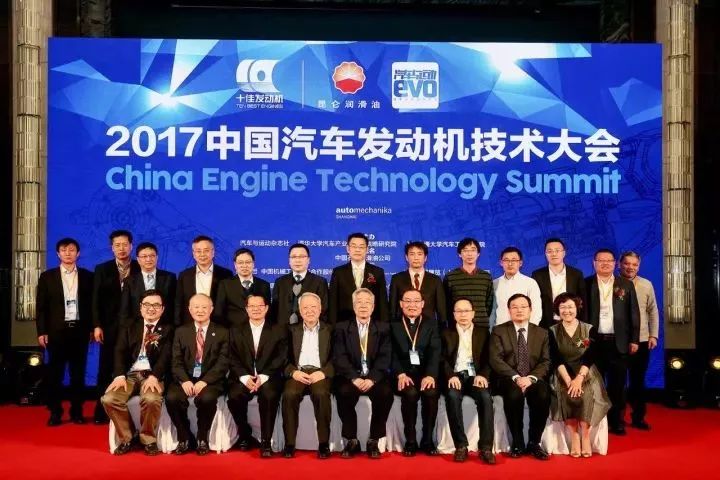
 Group photo of the attending guests
November 30, 2017, Shanghai. The 2017 (Third) China Automotive Engine Technology Conference was successfully held, jointly organized by Auto & Sport evo magazine, the Tsinghua University Institute for Automotive Industry and Technology Strategy and the Automotive Engineering Institute of Shanghai Jiao Tong University, exclusively titled by PetroChina Lubricant Company, and co-organized by China National Machinery Industry International Cooperation Co., Ltd. and Messe Frankfurt (Shanghai) Co., Ltd.
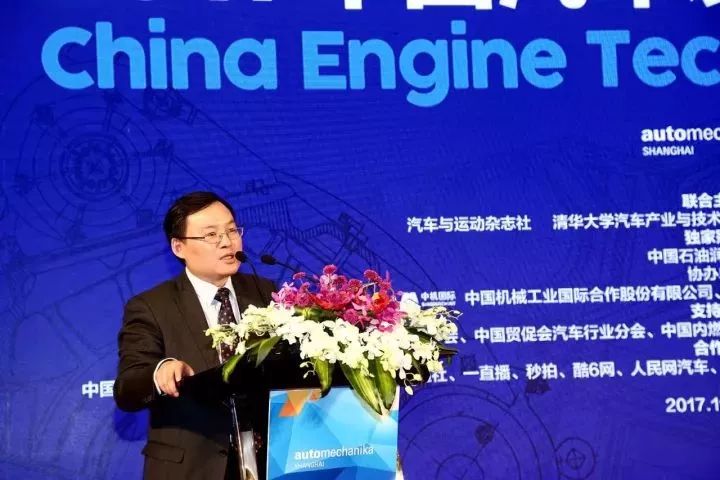
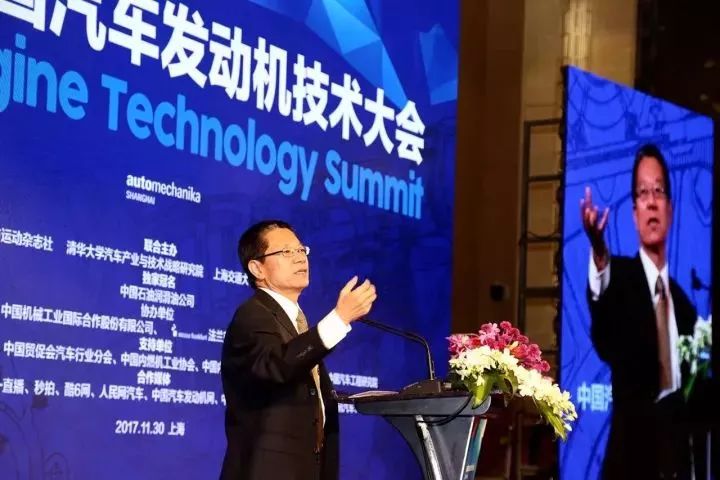
Gui Junsong, editor-in-chief of China Automotive News, addresses the conference
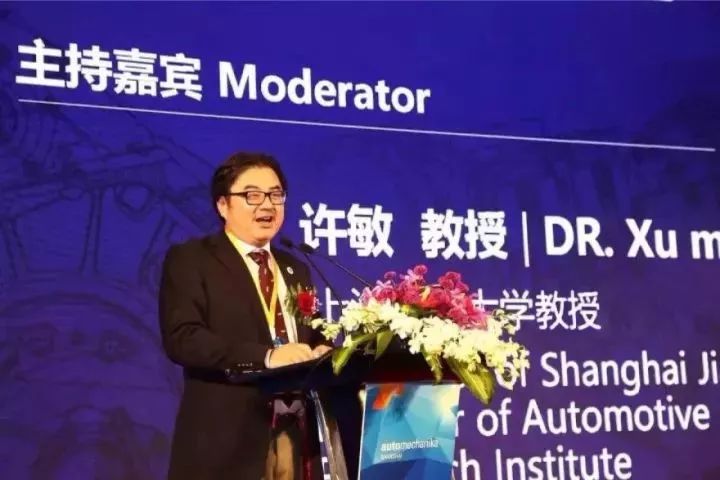
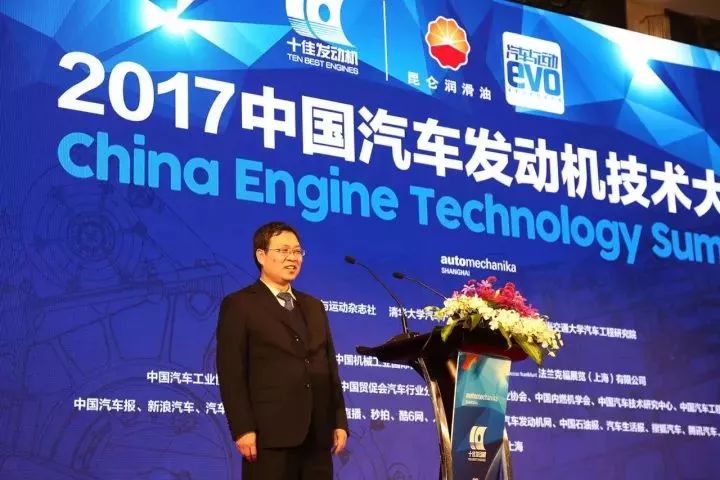
Xu Min, professor of Shanghai Jiao Tong University and dean of the Automotive Engineering Institute
The China Automotive Engine Technology Conference is a platform for sharing knowledge, tracking industry hotspots and showcasing advanced automotive technology. Its smooth convening is an inevitable result of the vigorous development of China’s auto industry and engine sector, and also a crystallization of the “China Heart” Top Ten Engines selection.
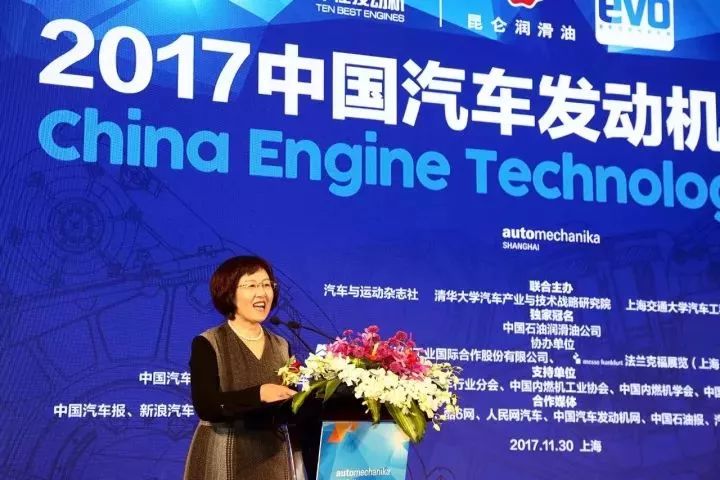
Zhou Lijuan, publisher of Auto & Sport evo magazine
During the conference, technical leaders and senior experts from mainstream domestic and international automakers, parts companies and universities — including Zhongyuan Neipei, Great Wall Motor, Toyota Motor, SAIC Motor Passenger Vehicle, the “China Heart” Top Ten Engines jury and PetroChina Lubricant — gathered to discuss the key technologies of automotive engines and their future development trends.
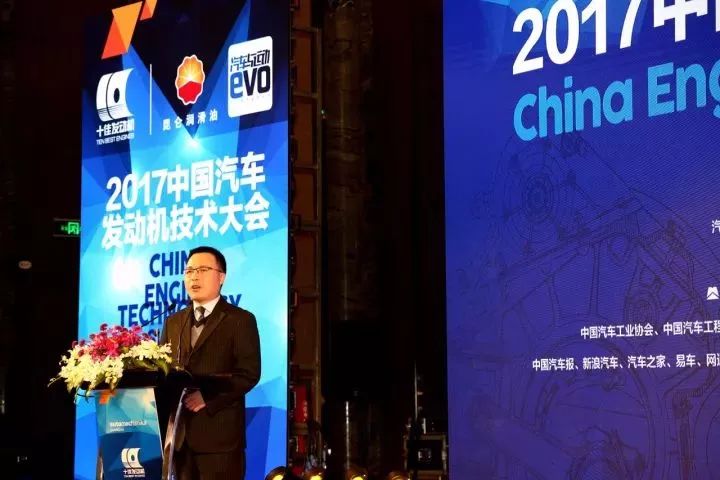
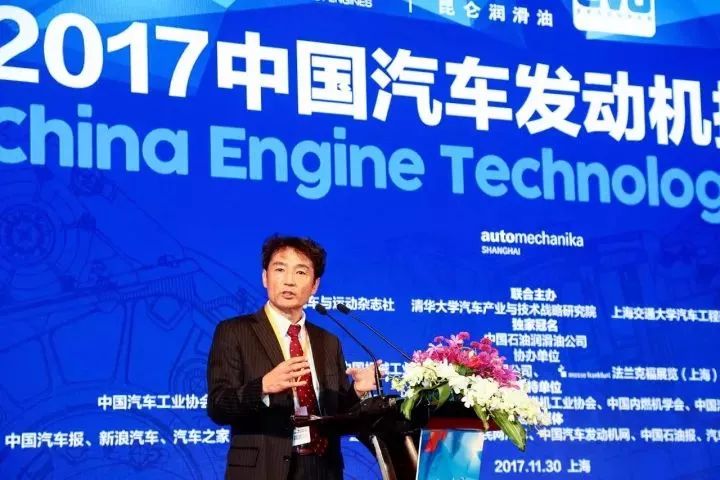
Yang Junjie, deputy chief engineer of PetroChina Lubricant Company, addresses the conference
Research and application of passenger-car engine cylinder liner technology
Liu Zhijun, general manager of the marketing headquarters and chief engineer of Zhongyuan Neipei Group, spoke first on “Research and Application of Passenger Car Engine Cylinder Liner Technology.” Mr. Liu first introduced the group, founded in 1958 and headquartered in Jiaozuo City, Henan Province, with 27 subsidiaries worldwide and 2017 group automotive parts revenue of 3 billion yuan, covering eight major fields including engine parts, automotive electronics, intelligent driving and intelligent equipment. As for cylinder liners, strong R&D advantages have produced products with outstanding performance, giving it a 42% domestic market share and 15%–20% internationally. In addition to meeting higher strength requirements, new products must also deliver wear resistance, friction reduction and excellent heat conduction to meet the technical needs of next-generation engines. Finally, Mr. Liu said: “Zhongyuan Neipei is completing globalized supply chain support and services with world-class casting, surface treatment, machining and engineering testing capabilities.”
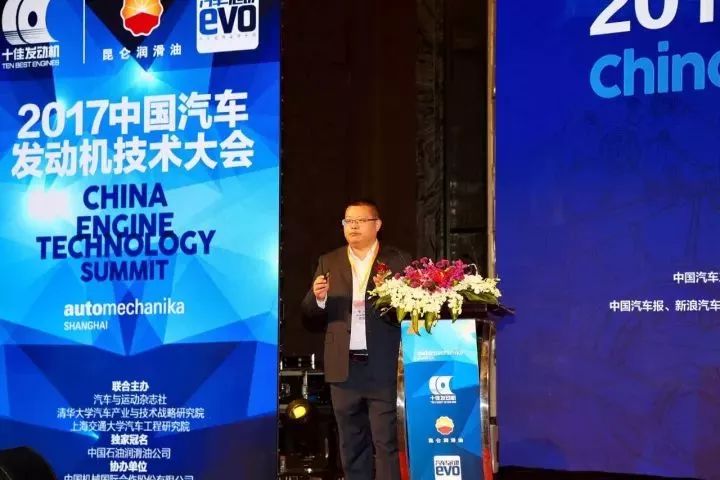
Liu Zhijun, general manager of the marketing headquarters and chief engineer of Zhongyuan Neipei Group
Independent development of the GW4B15 turbocharged direct-injection engine
Gao Dingwei, chief engineer of the Powertrain Research Institute of Great Wall Motor Co., Ltd., described the independent development of Great Wall’s GW4B15 1.5 GDIT turbocharged direct-injection engine, which won an annual Top Ten Engines award, showing that self-owned brands can likewise combine many advanced technologies in an independently developed engine. Great Wall Motor is committed to comprehensively upgrading its mainstream model, the Haval H6; the all-new Haval H6 is powered by the newly developed 1.5 GDIT gasoline engine, and through the development of advanced technologies such as an exhaust manifold integrated into the cylinder head, continuously variable valve lift (CVVL), an electronically controlled turbocharger, a dual cooling system, a two-stage variable-displacement oil pump and centrally mounted direct injection, it has created a star product in step with the world’s advanced engines.
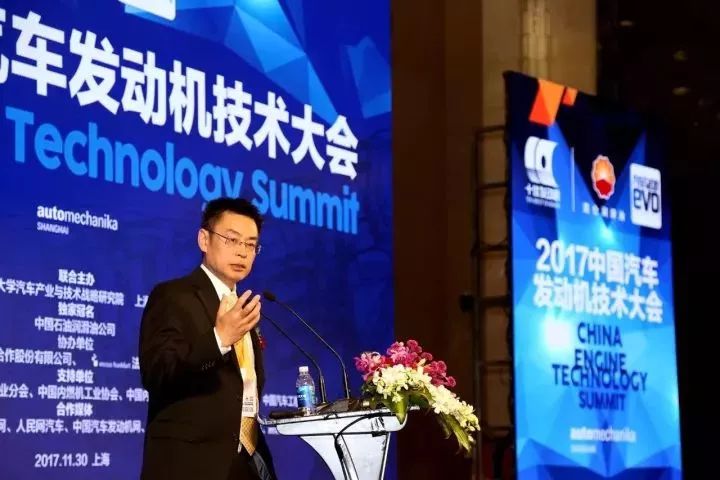
Gao Dingwei, chief engineer of the Powertrain Research Institute of Great Wall Motor Co., Ltd.
Challenges brought by gasoline engine technology progress and lubricant solutions
Wang Liping, deputy director of the Research Management Department and senior engineer at the PetroChina Lanzhou Lubricant R&D Center, spoke on the challenges brought by gasoline engine technology progress and lubricant solutions. Wang Liping said that as emission regulations become ever stricter, China is also comprehensively promoting small-displacement turbocharged engines, which places higher demands on lubrication. Lubricants must not only retain the indispensable “four basic requirements” but also meet technical requirements such as low phosphorus, and must overcome the low-speed pre-ignition problem brought by small-displacement turbocharging. Today, through analysis of factors such as low-speed pre-ignition, Kunlun Lubricant has successfully developed products with stronger performance that not only improve energy-saving effects but are also cleaner, with low-speed pre-ignition reduced by 50%. While meeting the requirements for overcoming low-speed pre-ignition (LSPI), lubricants also need to satisfy other performance requirements, such as anti-wear, sludge control, deposit control and fuel economy.
Wang Liping, deputy director of the Research Management Department and senior engineer at the PetroChina Lanzhou Lubricant R&D Center
Development of hybrid systems and engines
Hideaki Yaguchi, general manager of the Hybrid System Control Development Department at Toyota Motor Corporation of Japan, gave a keynote on the development of Toyota’s hybrid systems and engines. By comparing the newly launched next-generation Camry 2.5L engine with the older version, Yaguchi highlighted the advantages of the new-generation engine with its more outstanding performance. Yaguchi also explained Toyota’s long-term powertrain strategy through 2050, emphasizing further improvements in engine thermal efficiency. He also pointed out that the engine is crucial to reducing the fuel consumption of hybrid systems and will need continuous improvement in the future.
Hideaki Yaguchi, general manager of the Hybrid System Control Development Department at Toyota
SAIC Motor Passenger Vehicle’s path to forward-development of engines
Dr. Xu Zheng, director of the Powertrain Analysis and Testing Department of the Shanghai Automotive Technical Center and director of the Shanghai Key Laboratory of Automotive Powertrain, gave a keynote on SAIC Motor Passenger Vehicle’s path to forward engine development. Through analysis of the combustion process, the company has advanced new energy vehicles toward low-carbon, informatized and intelligent development. He analyzed the development experience of SAIC’s 1.5T engine, in which optimization of the combustion system and the high-pressure injection system improved engine performance, and he also looked ahead to future engine technologies.
Xu Zheng, director of the Powertrain Analysis and Testing Department of the Shanghai Automotive Technical Center and director of the Shanghai Key Laboratory of Automotive Powertrain
Release of the latest technology trends in automotive engines —
Technical decoding of the “China Heart” 2017 Top Ten Engines
Yao Chunde, professor of the School of Mechanical Engineering at Tianjin University, deputy director of the State Key Laboratory of Engines at Tianjin University and expert juror of the “China Heart” annual Top Ten Engines selection expert review committee, delivered the expert review committee report for the “China Heart” 2017 Top Ten Engines selection. He analyzed the technologies of the engines that won the “China Heart” 2017 awards, examined the technical characteristics of the “China Heart” 2017 Top Ten Engines, interpreted the core technologies of the engines entered this time, summarized the advanced technologies of the top ten engines, and analyzed the great strides made in self-owned brands’ engine R&D technology. Finally, Mr. Yao said: “In the 12 years since the ‘China Heart’ Top Ten Engines selection began, we have gone from foreign-brand engines dominating in the first edition to self-owned brands now holding half the field; we have fully witnessed the rapid development of China’s auto industry. China’s automobile production and sales have ranked first in the world for many consecutive years, making us the world’s largest automobile producer and seller. China’s auto industry has gone from completely following others in the past to now gradually running alongside them. We believe that with everyone’s unremitting efforts, in the near future we will surely become leaders in the auto industry!”
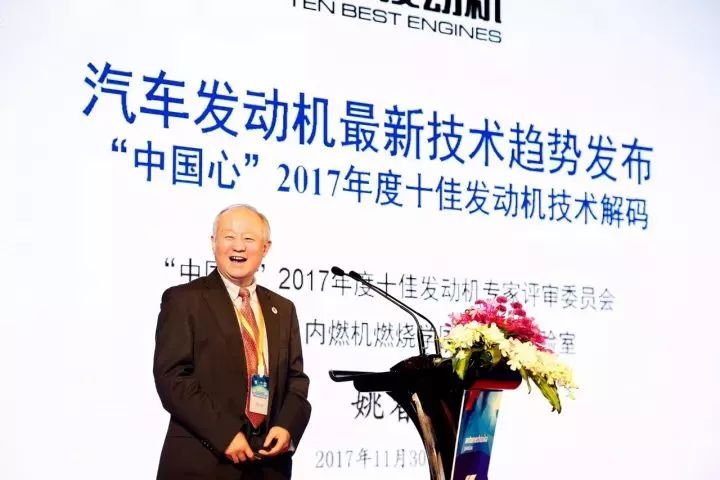
Yao Chunde, professor of the School of Mechanical Engineering at Tianjin University, deputy director of the State Key Laboratory of Engines at Tianjin University and expert juror of the “China Heart” annual Top Ten Engines selection expert review committee, delivers the closing keynote of the technology conference